GraphRAG for business knowledge bases: when is it worth using?
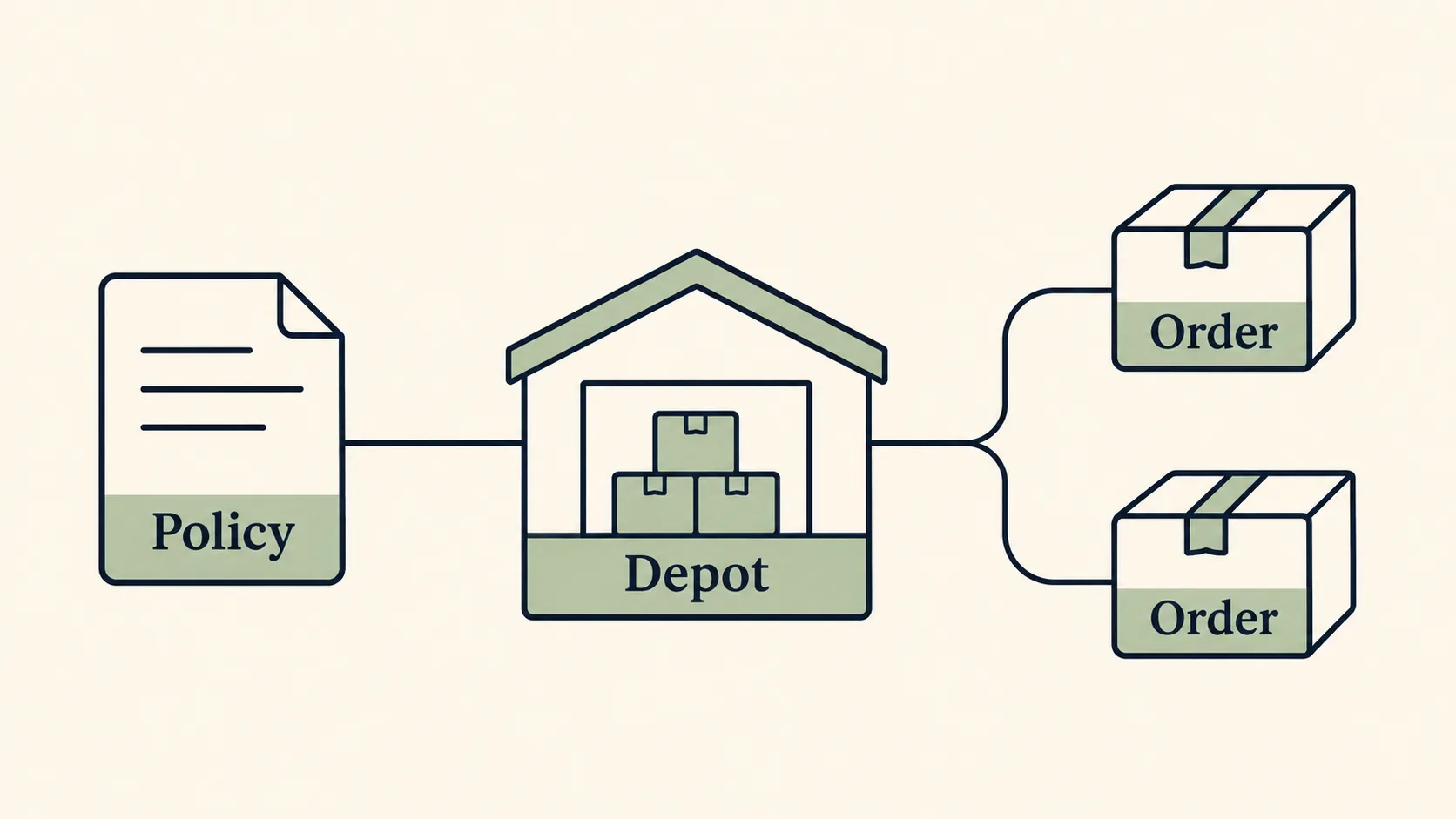
If a colleague needs the current delivery policy, give them the shortest reliable route to that document. If they need to work out which orders a change to that policy affects, ask them to show you how they join the records today. That second question is a reason to test GraphRAG, a way of finding answers using the connections between things mentioned in your records.
Start with a handful of questions staff actually asked last week. For each one, decide what a good answer would let someone do. Opening a form, explaining a rule and tracing an exception across three departments are different jobs. A business can reasonably choose a different way to handle each one.
What does someone need when they say they cannot find an answer?
Imagine a UK wholesaler with delivery instructions in a shared folder, order details in its sales system and an exception agreed by email. A member of the service team asks, “Can we send this order straight to the customer's site?” This is a hypothetical example. Follow the question back to the person who usually answers it.
Perhaps they send everyone the same page of the delivery handbook. Try pinning that page where staff process orders and giving it the name they use on the phone. If staff can now answer the question themselves, you have a good place to stop.
Perhaps the colleague opens the order, checks which depot will fulfil it, then looks up an agreement for that particular site. Write down what sent them from one record to the next. Also ask where the trail ends. If the decisive detail was a verbal instruction nobody recorded, ask the person responsible to confirm it in writing before including the question in a search trial.
If nobody agrees who owns the delivery rules, resolve that first. The AI readiness assessment can help you decide which part of the business is ready for a trial. A good starting area has someone who can tell you, with authority, when an answer is wrong.
When are plain search and ordinary RAG enough?
Choose plain search when the reader wants a particular item. Someone looking for a returns label wants to open the right file and use it. Test the words they type, including an old name still used on the shop floor. Check where the approved file appears and whether an obsolete copy looks equally convincing.
Retrieval-augmented generation (RAG) adds a writing step. The system looks up relevant material, then gives it to a language model, the software that writes a response. In an ordinary passage-based setup, the starting material is a selection of extracts from your documents. Staff can ask a question in their own words and read an answer drawn from the extracts. Source: Edge and colleagues' explanation of RAG.
Try that approach for “What should I ask the customer to photograph if a parcel arrives damaged?” If the procedure spells out the required photos, ask a service colleague to compare the answer with the original. Did it mention the packaging as well as the item? Did it preserve the exception for an unsafe parcel? Would the colleague send the right instructions without rewriting them?
Use the same discipline if the answer will be spoken to a customer. Read it aloud and decide what the caller should hear when the procedure is silent. The guide to preparing a voice agent's knowledge base covers that separate task.
What does a knowledge graph add?
A knowledge graph is a map of things and their connections. The things are called entities. A depot, a customer site and a supply agreement could each be an entity. A relationship says how two things are connected. “Depot serves site” and “agreement covers site” tell you different things about the same site. Microsoft's GraphRAG project uses a language model to extract entities and relationships from text and prepare summaries of groups of connected entities. Source: Microsoft's indexing overview.
Return to the wholesaler. Suppose a depot notice suspends direct deliveries. An order records the customer's trading name, while a separate schedule lists the affected sites under their delivery addresses. A good answer to “Which of our open orders need a different delivery arrangement?” has to connect the depot to the site and the site to the order. For the trial, pick an order with a similar customer name at a different address. Including it would expose a mistaken connection.
There is also a question you might ask without naming any depot at all. “What problems keep coming up in our delivery handovers?” asks for a view across the collection. Microsoft's local search draws on information about particular entities and passages from the source documents. Its global search works across prepared summaries of groups. That gives you two distinct things to test. Source: Microsoft's explanation of local and global search.
In their paper of 24 April 2024, Microsoft Research's Darren Edge and colleagues reported that, for the whole-collection questions they tested, graph-based answers covered more relevant ground and a wider range of points than their basic RAG comparison. The study gives you a reason to try a broad handover question. You still need your own evidence before relying on an answer about a particular order. Source: the original 2024 GraphRAG paper.
Which approach should you try first?
Use the staff member's intended action to pick a starting point. These examples are suggested tests for the hypothetical wholesaler.
| Staff question | First approach and acceptance check |
|---|---|
| Where is the damaged-goods form? | Plain search. Open the current form using the words a new starter would type. |
| What photos should I request? | Ordinary RAG. Check every instruction against the approved procedure. |
| Which orders use a site covered by this exception? | Compare ordinary RAG with graph search. Check the list against orders verified by the depot lead. |
| What themes recur across handovers? | Compare passage-based answers with a graph-based summary. Ask staff to trace each theme to examples. |
| How many orders are awaiting dispatch right now? | Start with the live order report. Agree which order statuses count and read the total there. |
Include cases where the simplest approach wins. If the depot and site are already recorded on every order, try filtering the order list before building anything. For a broader choice between this work and other improvements, the guide to AI for business growth can help frame the decision around the business task.
Ampliflow offers Company Cortex, its GraphRAG-powered knowledge service, for source-backed answers from approved company information. If you are comparing approaches, take the same staff questions to each demonstration.
What will it cost to build and keep current?
Separate the first read of your records from the cost of answering the next question. Indexing means preparing material so the system can find and use it later. Microsoft's standard graph indexing process includes extracting connections and writing summaries. Its maintainers warn that indexing can be expensive and advise starting with a small collection. Source: Microsoft's GraphRAG project notes.
A model call is one request to the software to process material or write a response. Ask whoever runs the trial to record the calls needed to prepare the collection separately from those needed to answer staff. A whole-collection question can involve processing several summaries and combining the answers. Ask to see the difference between that question and one about a single site. Check the vendor's current pricing page when costing the work. Source: Microsoft's description of global search.
Budget staff time too. Who will reconcile two names for the same depot? Who will check the answer when a site changes hands? Include the time the service team spends checking citations alongside the time it currently spends finding the evidence by hand. The comparison of automation and manual costs gives you a starting point for that calculation.
Give freshness its own test. Replace an approved instruction with a dated revision, withdraw the old copy and ask the original question again. Check the answer, its source link and any wider summary that mentioned the old rule. Record how long each takes to change and what staff should consult in the meantime. Set the acceptable delay according to the decision someone will make.
Who may see the evidence behind an answer?
Start with two real roles, such as a depot supervisor and a temporary service adviser. Write down which records each should be able to read. Access control means enforcing those permissions when somebody asks a question. Microsoft's documentation for Azure AI Search illustrates one implementation and explains how changes to source permissions need to reach the search index. Ask how the system under consideration handles that change. Source: Microsoft's document-level access guidance.
Use made-up records for the first access test. Put an agreed delivery exception in a general procedure and a confidential reason for it in a restricted note. The adviser should be able to explain the exception. Check whether the answer also reveals the reason, even in paraphrase. Repeat with a broad question about unusual delivery arrangements, then remove the supervisor's access and repeat under that account.
Ask for a citation beside each consequential part of an answer. A citation is a reference the reader can follow to the supporting passage. In the depot example, one source should establish the affected site and another should connect it to the order. Open both as the person asking. Check the date, the exact wording and whether the record shows approval. An email proposing a change is evidence of a proposal. It takes a further record to establish that somebody agreed it.
How should you judge a trial with real staff questions?
Ask a service adviser, a supervisor and a recent starter to contribute questions in their own words. Include one they had to abandon. Before anyone sees a generated answer, have the person responsible for the process record the expected answer, acceptable evidence and any circumstances in which staff should ask for help. Keep a few questions back until the final comparison.
Give each approach the same approved material and the same access rights. Let staff use the normal search route as well. Time the task through to a decision they can defend. If opening and checking three citations takes longer than finding the original procedure, record that time. If the graph finds a site exception the other methods missed, save the question and the two records that prove the connection.
Review errors by consequence. Missing a minor theme in a handover summary and disclosing a confidential agreement deserve different decisions. Mark a question as unanswered when the evidence is missing. Give credit when the system recognises that gap and directs the adviser to the person who can resolve it. Keep permission failures visible as individual cases, even if the rest of the answers score highly.
Choose the simplest approach that passes the checks for the task. If graph search earns its place only on cross-site questions, limit the initial use to those. If someone else will run the comparison, the guide to choosing an AI consultant sets out questions about responsibility and handover. Use the Company Cortex service description alongside your test sheet when assessing whether it fits that work.
Frequently asked questions
Do we need to put every email into the knowledge base?
Start with the approved sources needed to answer your trial questions. If a decision exists only in a long email thread, ask its owner to identify the final agreement, its date and who may read it. You can then decide whether to include that record or move the instruction into a maintained procedure.
How many documents would justify a knowledge graph?
Use the question as your threshold. A large folder of standard forms may need a good catalogue. A much smaller collection may justify a graph trial if staff repeatedly have to trace a site exception through agreements, depot notices and order records. Ask for an example where the connection changes what someone should do.
Can we use a summary to decide which problem is most common?
For a decision about frequency, ask for a count from identifiable records. Define the period, decide what counts as one incident and remove duplicate reports of the same event. Use a summary to suggest themes to investigate. Verify the numbers separately before deciding which problem deserves budget.
What should staff do if two sources disagree?
Ask the answer to show the disagreement and point to both passages. Give staff a named role to contact before acting. Once the owner has decided which instruction applies, correct the underlying material and repeat the question. Keep the example for the next review so you can check that the old answer stays retired.
What should we take away from a demonstration?
Keep the original questions, answers and source links, the access level used and your reviewers' decisions. Ask for the cases where each approach struggled as well as those it handled well. You should be able to explain which staff task warrants the extra work of a graph and which tasks your existing search can already handle.