Public-sector digital services
Public-sector websites and software, delivered with clarity.
From public-facing websites to multi-user portals, database-backed applications and reporting systems, Ampliflow turns detailed requirements into dependable, maintainable digital services.
Have a tender pack or technical specification? Send it to hello@ampliflow.ai for an initial capability review.
- 01Public-facing services
- 02User and staff interfaces
- 03Operational logic
- 04Data and reporting
- 05Service operation
Launch, handover and agreed support
One delivery partner for the whole service
A public-sector digital delivery partner brings the different parts of a complex requirement into one coherent system.
That can include requirements discovery, information architecture, accessible interface design, software engineering, database development, integrations, migration, testing, deployment, documentation and agreed support.
Ampliflow approaches these as connected responsibilities. The website, internal interface, underlying data and operational workflow should work together—not become separate projects that leave your team managing the gaps.
More than the interface people see
A successful digital service connects every layer while keeping each one understandable, maintainable and appropriate for the people using it.
- 01
Public-facing services
Websites, searchable information, directories, forms and self-service journeys.
- 02
User and staff interfaces
Permissioned portals, administration areas, internal tools and approval workflows.
- 03
Operational logic
Routing, notifications, integrations, document handling and repeatable processes.
- 04
Data and reporting
Structured records, search, filtering, exports, dashboards and audit history.
- 05
Service operation
Testing, monitoring, documentation, handover and agreed support.
Built for requirements that do not fit a template
- 01
Public websites and information services
Accessible, responsive websites organised around what people need to understand, find and do. This can include structured content, document libraries, directories, events, searchable records and public information services.
Publishing can be organised around different editorial responsibilities, approval routes and content types, giving internal teams appropriate control without weakening the public experience.
- 02
Portals and multi-user applications
Purpose-built interfaces for the public, customers, staff, administrators or partner organisations. Each group gets the journeys, permissions and responsibilities it needs.
- 03
Data, search and reporting
Database-backed services that turn complex information into useful records, filtered views, exports and reporting. The right people can find what they need without relying on disconnected spreadsheets or manual workarounds.
- 04
Workflows and integrations
Connected processes spanning forms, approvals, notifications, document handling and third-party systems. The technology follows the real operational process rather than forcing teams into a generic workflow.
- 05
Content and data migration
A planned route from the existing service into the new one—covering content, structured data, ownership, dependencies, validation and the transition into production.
- 06
Testing, handover and improvement
Functional, integration, accessibility and performance considerations built into delivery. Acceptance criteria, documentation and handover make the completed service understandable beyond the original build team.
Software is a core capability here
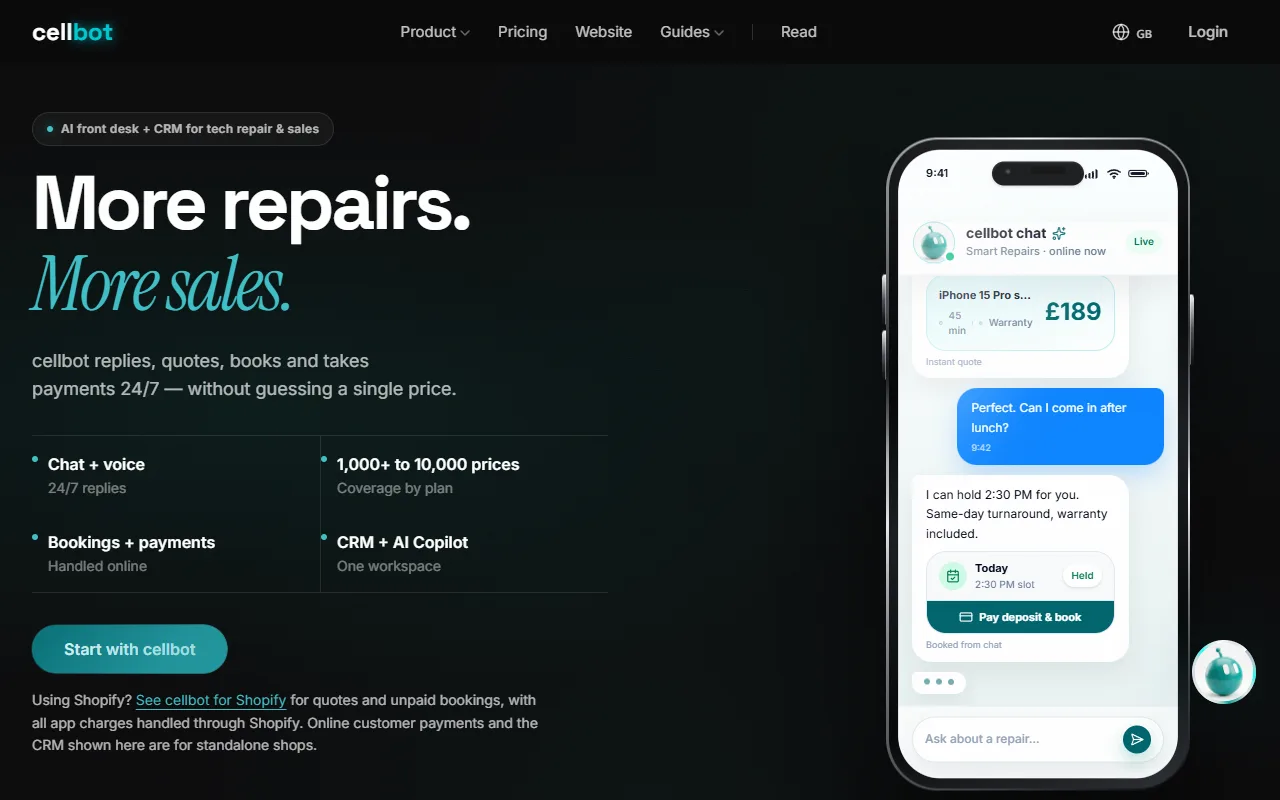
Cellbot is a multi-tenant SaaS platform designed and built by Ampliflow for the phone-repair industry.
It brings together customer intake, complex price discovery, booking journeys, customer tracking, payments and automated follow-up within one connected operational product.
Different users interact with different parts of the system. Data moves between public interfaces, internal workflows and customer-facing tools. The result is not simply a website with additional features—it is software shaped around how the underlying business operates.
Other software designed and built by Ampliflow
- Kodigram
- LimeStream
- Vyzytr
Across these products, our work covers multi-user journeys, data-backed interfaces, permissioned workflows and operational logic designed around a distinct real-world use case.
These are commercial software products, not public-sector case studies. We include them because they demonstrate the underlying capability: understanding a layered requirement and turning it into coherent, usable software.
Built around the requirement—not a preferred platform
Formal digital projects bring together more than design and development. They involve users, content, data, governance, existing systems and the practical realities of operating the service after launch.
- 01
Requirements that remain traceable
Important requirements should not disappear between the tender document and the final build. We connect the original requirement to the proposed solution, delivery work and acceptance checks.
- 02
Accessible by design
Services can be designed and tested against stated accessibility requirements such as WCAG 2.2 AA. This includes interface behaviour, content structure, keyboard access, assistive-technology considerations and reduced-motion support—not simply an automated score at the end.
- 03
Privacy and security considered early
Data sensitivity, permissions, integrations and operational risks influence the architecture from the beginning. Specific security, hosting and assurance requirements are established from the brief rather than assumed.
- 04
Designed for real users and teams
A public service may need to work for residents, applicants, members, staff, administrators and partner organisations. Each group needs the right information, actions and level of access without unnecessary complexity.
- 05
Tested against the intended outcome
Testing should demonstrate that the service works across its interfaces, workflows, integrations and data—not merely that individual pages load correctly.
- 06
Maintainable after launch
Clear architecture, documentation and handover reduce dependency on undocumented knowledge. Agreed maintenance and improvement can then be planned around the needs and importance of the service.
- 07
Ownership and service continuity
Data ownership, documentation, export requirements and future supplier transition should be considered before development begins. The service should remain understandable and transferable rather than depend on undocumented knowledge or unnecessary lock-in.
From requirement to working service
Brief
01Requirements and risks
02Architecture and delivery plan
03Design and engineering
04Testing and acceptance evidence
05Launch, handover and agreed support
06
- 1.
Understand
We examine the brief, intended users, operational process, existing technology, data and procurement requirements.
Output: a shared understanding of the whole problem.
- 2.
Define
Requirements become an appropriate scope, architecture, delivery plan, dependencies and acceptance criteria.
Output: a clear route from the written requirement to implementation.
- 3.
Design and build
We create the interfaces, software, databases, integrations and workflows required to operate the service.
Output: working software demonstrated throughout delivery.
- 4.
Assure and launch
Content and data are migrated where required. The service is tested, documented and prepared for a controlled production launch.
Output: an acceptance-ready service with known decisions and evidence.
- 5.
Support and improve
Handover, maintenance and future improvements are agreed around the needs of the organisation and service.
Output: a service that can continue operating and developing after launch.
Working from a tender, ITT or RFP?
Detailed procurement documents often combine website delivery, software development, migration, accessibility, integrations, reporting and long-term service requirements.
We assess the document as one connected requirement—identifying how the parts depend on each other, where delivery risk sits and whether Ampliflow is the right technical partner.
- The tender, ITT, RFP or requirements document
- The outcomes the service must support
- Intended users and internal stakeholders
- Existing platforms and technology constraints
- Data, migration and integration requirements
- Accessibility, security and reporting expectations
- Procurement and delivery timetable
- Expected support period
What happens next
We will review enough of the requirement to establish:
- Whether there is a credible fit
- The main assumptions and dependencies
- Questions that should be resolved before delivery
- The likely shape of the technical approach
- The most sensible next step
We will be equally clear when a requirement needs capabilities, accreditations or resources that sit outside our current scope.
Share your briefSend your requirements to hello@ampliflow.ai.
Complex requirements are not limited to one sector
Our approach may be suitable for:
- Public bodies and government agencies
- Councils and local authorities
- Regulators and standards organisations
- Membership and professional organisations
- Charities and non-profits
- Education organisations
- Complex private-sector and enterprise teams
This list describes the organisations we can support. It does not imply existing appointments or previous contracts where none have been stated.
Public-sector digital services questions
Bring the whole requirement into one delivery plan.
Share your brief, tender pack or early-stage requirements. We will establish whether Ampliflow is the right technical partner and outline the clearest next step.
hello@ampliflow.ai