SEO for solicitors: practice pages, local search and enquiries
Plan SEO for solicitors around useful practice pages, genuine local presence and relevant searches. Connect visibility to suitable, handled enquiries.
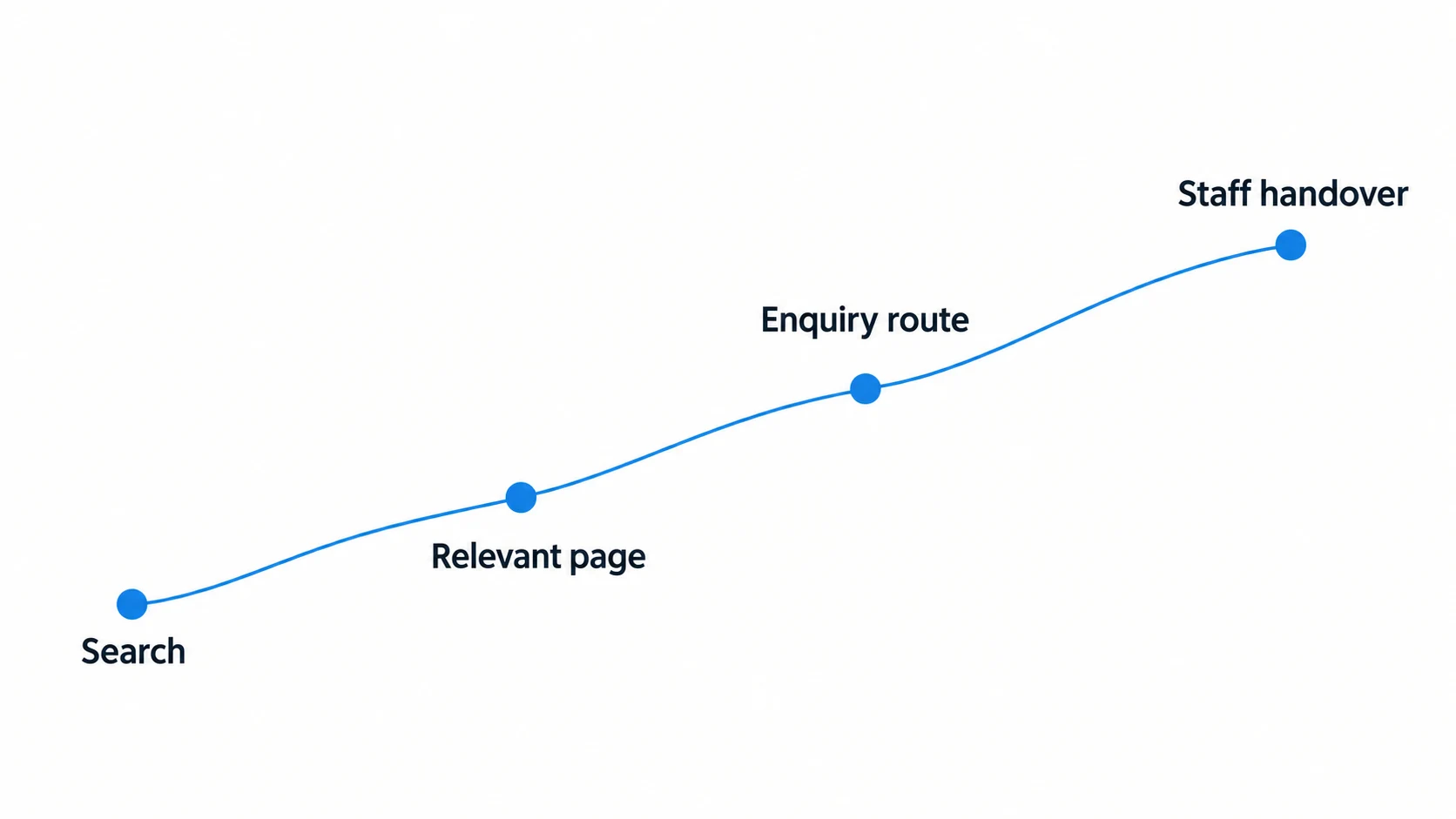
A solicitor's website needs to help the right person understand whether the firm can help, take the next step and reach somebody responsible for the enquiry. Search visibility is one part of that journey.
Start with a service the firm actually provides and can support. Give that service a clear page, substantiate the firm's experience and make the contact route work. Measure what happens after the visit as carefully as the visit itself.
Give each page a job
A practice page should help a prospective client decide whether to contact the firm. An explanatory article answers a narrower question. A location page is useful when it explains a genuine local service or office; changing town names in otherwise identical copy adds little for the reader.
| Page | Reader's decision | Useful evidence or information |
|---|---|---|
| Practice page | Does this firm handle my type of matter? | Confirmed scope, relevant people, process and the appropriate contact route |
| Question-led guide | What should I understand before making an enquiry? | Plain-English explanation, jurisdiction, source references and professional review |
| Office page | Can I access this service here? | Genuine address, contact details, accessibility and appointment arrangements |
| Enquiry page | What should I provide, and what happens next? | Essential fields, privacy information and an accurate explanation of handling |
These are editorial recommendations, not a formula for ranking. Choose the pages from real client questions, search evidence and the firm's priorities. Preserve existing useful URLs rather than creating several pages to compete for the same question.
Map searches to the right page
SEO means search engine optimisation: helping relevant searchers find and understand a useful page. Start with the firm's actual services and examine the search results before choosing a target.
| Illustrative search | Preferred destination | What the page must answer |
|---|---|---|
| “conveyancing solicitor in [town]” | Genuine local service or office page | Does the firm handle this work here, and how do I enquire? |
| A question about the stages of a property purchase | Reviewed explanatory guide | What does each stage mean, and what depends on the case? |
| The firm's name and telephone number | Contact or relevant office page | Which number and contact arrangements are correct? |
These are examples, not measured keyword volumes. Assign one preferred destination to each intent and link related guides to it. Do not create separate near-identical pages for “lawyer” and “solicitor” solely to repeat a keyword.
Keep local search information accurate
For an eligible Google Business Profile, use the real business identity, appropriate categories and accurate contact details. A rented mailing address without an operating office does not create an eligible location. Practitioner and shared-office arrangements need checking against Google's current business guidelines.
Keep office pages and the profile consistent. Reviews should reflect genuine experience; responses must not reveal a client's matter details. Profile views and calls are useful signals, but the firm still needs to record whether suitable enquiries reach the team.
Make the practice's claims inspectable
Identify the people responsible for the work and describe their qualifications accurately. Keep service claims, office details and contact arrangements consistent. Use client examples only with the necessary permission and confidentiality review; anonymisation alone may not make a distinctive matter safe to publish.
For firms regulated by the SRA, the Transparency Rules require specified information for covered services, including relevant price and service details. Other requirements concern complaints and regulatory information. Check the rules against the firm's actual services rather than assuming every practice area has identical publication requirements. Scotland and Northern Ireland need their own applicable professional review. SRA Transparency Rules.
AI can help organise approved material or prepare a draft explanation. A qualified reviewer should check legal content, jurisdiction, dates and claims before release. The site should never imply that an unreviewed generated answer is advice from the firm.
Treat AI search as a discovery channel
Google says its ordinary search foundations also apply to AI features. Supporting pages need to be indexed and eligible to appear with a snippet. There is no additional special AI schema or machine-readable file required for inclusion. Eligibility does not guarantee that a page will appear. Google Search Central: AI features.
The practical work is to make useful information accessible: readable page text, descriptive headings, relevant links and accurate content. Explain the firm's actual experience and answer the question properly. A formatting trick cannot substitute for that evidence.
When evaluating visibility in an AI answer, record the date, question, product and cited page. A single favourable answer is a sample, not proof of a stable ranking or a predictable source of clients.
Connect the enquiry to an owner
Imagine a prospective client arrives from a guide, submits a form and hears nothing. More traffic will not repair that handover.
A proposed intake workflow can record the enquiry source, identify the relevant team and create a named follow-up task. Any acknowledgement should describe the firm's actual handling arrangements. Booking or submitting a form must not be presented as confirmation that the firm has accepted the matter.
Keep the initial public form proportionate. Detailed documents and sensitive information may belong in a separate approved route. The enquiry ownership guide explains how to record responsibility, exceptions and follow-up without letting automation decide legal suitability.
Measure the journey in separate stages
- 01Search visibility
- 02Relevant visit
- 03Enquiry received
- 04Enquiry handled
- 05Consultation
- 06Matter accepted by the firm
Report search impressions and visits alongside qualified enquiries, consultations and accepted matters. Define those stages with the firm so that an automated acknowledgement does not count as a handled enquiry and a booking does not count as a new client.
Use comparable reporting periods and distinguish branded searches from searches for a service. Record attribution gaps and small samples. Search Console and website analytics can support the picture; the firm's own enquiry records establish whether suitable work reached the team.
As an implementation recommendation, keep case details out of marketing analytics and agree what minimal events may be recorded. A website form, an analytics event and a matter record have different purposes and should have appropriate access and handling arrangements.
The first useful improvement may be a clearer practice page, a better contact route or a reliable follow-up task. Choose from the evidence. The legal services hub brings those parts together with the firm's wider operations. For Ampliflow's wider search service, see AI Search optimisation.