The AI landscape: models, products, hardware and robotics
A dated map of the AI landscape, from frontier models and Chinese developers to NVIDIA, robotics and startups. Learn what each announcement establishes.
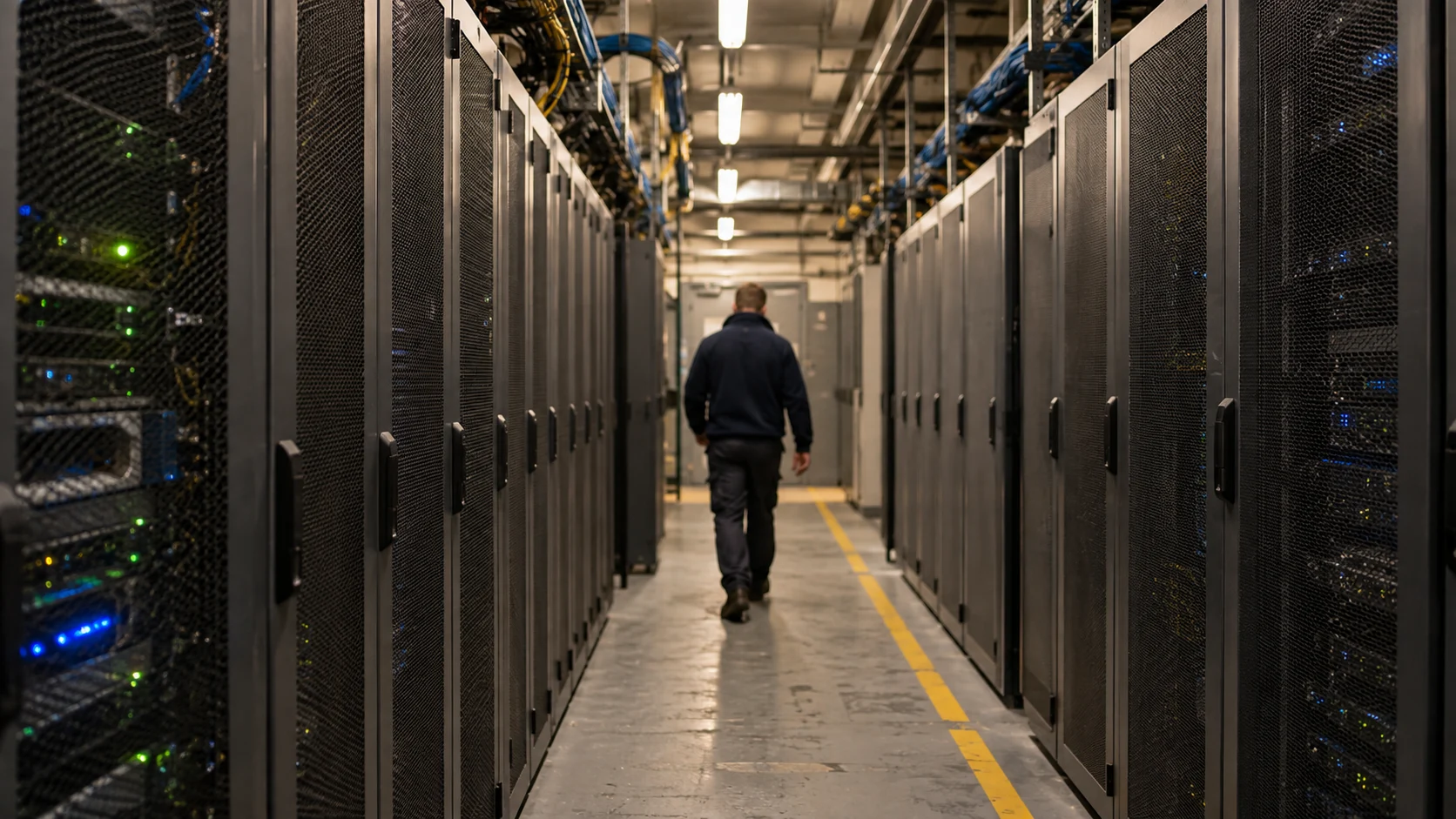
The AI landscape becomes easier to follow when you separate its layers. A new model, a new chat application and a new data-centre platform are different developments. Their announcements answer different questions.
This guide was checked on 2 October 2026. It is a dated snapshot, not a live leaderboard or a claim that Ampliflow has independently tested every named product. Check the linked source before making an adoption decision.
Start with five roles
- 01Models: generate and predict
- 02Products: access and tools
- 03Applications: a particular job
- 04Infrastructure: computation and resources
- 05Robotics: perception and physical control
Model developers train or release systems that generate or predict outputs. Product providers turn those capabilities into an experience people can use. Applications apply them to a particular job. Infrastructure supplies computation, memory, networks, power and cooling. Robotics combines software with sensors and physical control.
One company can work across several roles. A business selling an AI application may use another organisation's model. A hardware vendor may also supply models and development software. The company name alone does not explain the full system.
Frontier models and the products around them
OpenAI announced GPT-6.1 Sol on 29 September. Anthropic announced Claude Sonnet 5.5 on 28 September. SpaceXAI's x.ai site announced Grok 4.7 on 21 September and Team Bots on 28 September.
These are publisher observations. They establish what was announced, not whether a particular learner account can access it or whether it is best for a specific task. Keep the model version, product name, account and checked date together.
Google DeepMind's catalogue spans language, media and robotics. That breadth matters: a text-chat comparison cannot settle the best approach to transcription, video analysis or robot control.
Chinese developers and open releases
Qwen's publisher profile provides model families and individual model cards, including Qwen3.8 at this check. DeepSeek's GitHub organisation provides another primary route into technical releases. These are examples, not an exhaustive list of Chinese AI development.
A model card describes a particular release, its intended use and stated limitations. Inspect that exact card and licence. Open weights means the learned model parameters are available under specified terms. It does not automatically mean the training data, training code or unrestricted commercial rights are included.
Country of origin alone cannot establish quality, hosting location or data handling. Compare the actual deployment and terms. A small organisation using a hosted product faces different operational questions from a team running downloaded weights on its own equipment.
NVIDIA and the infrastructure layer
NVIDIA's data-centre catalogue describes Rubin GPUs, Vera CPUs and Spectrum-X networking. These are parts of a wider system; a headline chip specification does not establish the capacity, cost or energy use of your application.
A GPU is an accelerator that performs many numerical operations in parallel. Memory must hold the model and working data. Networks move information between machines. Queues, tools and application processing also contribute to the delay a person experiences.
Edge AI runs close to where data is produced, such as on a camera, robot or local gateway. A rack is the physical structure housing equipment; “edge” describes deployment location. Local processing may reduce data transfer, but logs or fallback services can still send information elsewhere.
Robotics needs different evidence
A robot must connect perception, planning and motion in the physical world. A successful edited video does not reveal how many attempts failed, whether a person assisted, or how the machine behaves around unexpected obstacles.
Ask for the task, environment, trial count, human intervention and failure handling. A language-model benchmark is not a robot-safety test. NVIDIA's Isaac platform illustrates the connection between simulation and robotics development; it does not establish that a demonstrated system is ready for every workplace.
Startups and benchmarks are signals to investigate
Y Combinator's Requests for Startups describes problems it wants founders to tackle. It is not proof that every idea has received investment or produced a successful business. Start with the customer problem and ask what changed enough to make a new approach plausible.
Likewise, a benchmark score needs its methodology. Artificial Analysis describes the tasks and limitations behind its Intelligence Index. Compare the exact version, tool access, retries and scoring method before reading a headline result as a reason to switch.
Turn the map into a decision
Write your task first. Then ask whether a development changes checked quality, total effort, access, cost or risk. “Interesting, but no change yet” is a sound conclusion when the evidence is thin.
Use our X and GitHub routine to trace one claim to its source. For the foundations, see how to learn AI and Ampliflow AI Edge. Staying current should sharpen your judgement, not consume all the time you meant to save.