AI Cold Calling: How It Works, What It Costs, and Is It Right for UK Businesses?
Published: March 2026 | Cluster 4: Cold Email Lead Generation | Reading time: 11 minutes
TL;DR
AI cold calling uses software-generated speech to conduct outbound conversations. The first question is whether the proposed call should happen, not how many calls the software can make.
Assess the calling system, audience, permission and data use before selecting a platform. An email click or website visit does not establish permission for an automated marketing call. Costs and results depend on the complete setup; there is no reliable universal cost-per-meeting benchmark.
If you are choosing an outbound route, start with our cold-email planning guide.
Key Takeaways
- Separate technical capability from permission to use it.
- Check the actual calling system against current rules and obtain specialist advice where classification is uncertain.
- Do not transfer email engagement into assumed calling consent.
- Compare full delivery costs and qualified outcomes, not headline per-minute rates.
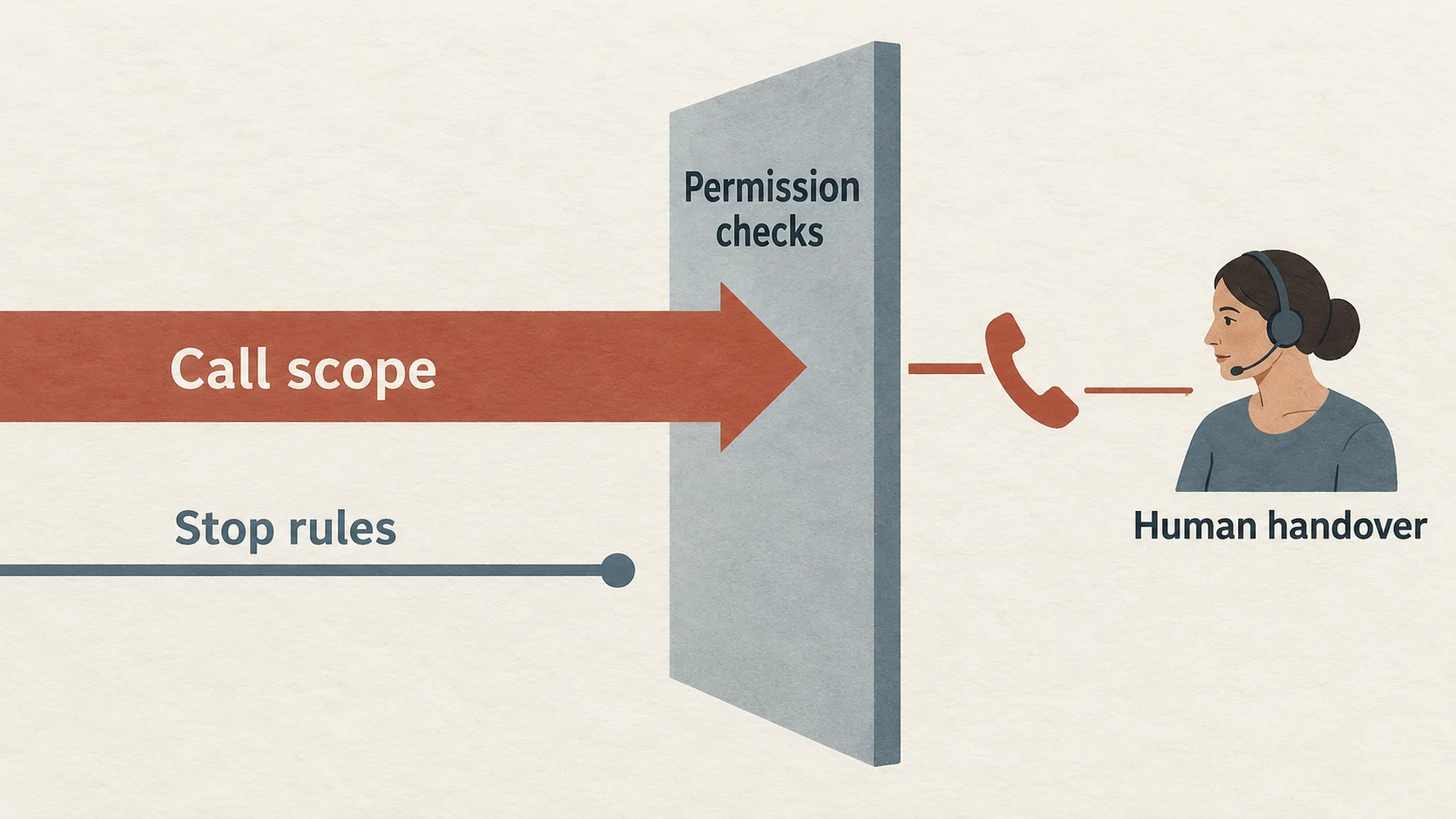
- Keep clear identity, stop rules and a human handover.
- Treat every example here as a planning scenario, not a client result.
The Cold Calling Landscape Has Changed — AI Entered
Voice software can help teams handle repetitive conversations, but buying a dialler does not resolve the audience, message or follow-up process.
Begin with the task: answering an incoming question, confirming a requested appointment and making an unsolicited sales call are different activities. Specify the purpose before comparing tools. Our cold-email planning guide provides a separate framework for written outreach.
What Is AI Cold Calling?
AI cold calling is the use of AI voice agents to make outbound telephone calls to prospects who have not previously engaged with your business. The AI conducts a real-time, two-way conversation — it is not a pre-recorded message or an automated keypad menu.
Here is how the technology stack works:
The Technical Architecture
| Component | What it does | What to test |
|---|---|---|
| Speech recognition | Converts spoken words to text | Names, accents and background noise |
| Language model | Suggests the next response | Accuracy and refusal to invent facts |
| Speech generation | Reads the response aloud | Clarity and interruptions |
| Telephone connection | Connects and routes the call | Failed calls and transfers |
| Workflow controls | Apply the agreed rules | Permission, stop requests and human handover |
Test the complete conversation. A fast model does not prove the telephone experience is reliable.
What a Typical AI Cold Call Sounds Like
For an eligible call, use a clear opening that identifies the organisation and the AI assistant. State the purpose, check whether the person wishes to continue and provide an easy way to stop.
Keep qualification questions relevant. A refusal should end the sales attempt, not trigger repeated rebuttals. Questions outside approved information should go to a person.
See our voice-agent guide for the broader technology.
AI Cold Calling vs AI Cold Email
| Decision | Calling | |
|---|---|---|
| Recipient experience | An immediate interruption requiring a response | A message that can be considered later |
| Eligibility | Assess the calling rules and exact system | Assess subscriber status, data use and electronic-mail rules |
| Cost model | Setup, telephony, connected time, review and handover | Setup, sending, data, writing, review and reply handling |
| Useful outcome | A suitable conversation and agreed next step | A suitable reply and agreed next step |
Do not choose a channel using an unsupported universal response-rate table. Compare your audience, full costs and a bounded test. Email engagement does not create calling permission. For another channel comparison, read cold email versus LinkedIn.
The Legal Landscape: TPS, PECR, and GDPR
This is the section that matters most. Get this wrong and no amount of clever AI scripting will save you.
PECR: The Core Regulation
The Privacy and Electronic Communications Regulations (PECR) distinguish live and automated marketing calls. The ICO's B2B guidance describes automated calls that play recorded messages and requires specific consent for them.
Do not assume that this settles the classification of every interactive AI system. Obtain an assessment of the actual design and use before launch. A vendor's claim that its software is conversational is not legal clearance.
TPS and CTPS
The Telephone Preference Service (TPS) and Corporate Telephone Preference Service (CTPS) record preferences against unsolicited marketing calls. Live marketing-call rules include checks against both registers and previous objections, with specific exceptions and stricter rules for some sectors.
Screening does not replace consent where consent is required. Record the calling decision and the evidence supporting it.
The 2025 Penalty Increase
Changes to UK data legislation mean older penalty summaries may be out of date. Check the ICO's current enforcement information and the applicable commencement position. Do not base a launch decision on an old fine cap or assume a maximum penalty predicts an individual case.
UK GDPR Considerations
Beyond PECR, you also need a lawful basis under UK GDPR for processing the personal data involved in making cold calls (names, phone numbers, job titles). For B2B outreach, legitimate interest (Article 6(1)(f)) can apply — but you must conduct a Legitimate Interest Assessment (LIA) and document it.
If your AI system records calls, transcribes conversations, or uses call data for training, additional data protection obligations apply — including transparency notices and potentially a Data Protection Impact Assessment (DPIA).
The Compliance Summary
Before considering a launch, document the system, audience, call purpose, permission, personal-data use and handling of objections. Identify who can stop the campaign and who reviews uncertain cases.
Keep email eligibility separate. The UK email rules guide explains why an eligible email does not authorise a subsequent call.
How AI Cold Calling Tools Actually Work
Setting aside the legal question for a moment — because there are compliant use cases — here is what the major platforms offer and how they function.
The Leading Platforms (2026)
Compare platforms against your requirements using their current documentation and a written quotation. Ask about supported telephone regions, recording controls, transfers, data handling, export access and shutdown controls.
A headline per-minute price may exclude telephone charges, speech services, model usage or minimum commitments. Record what is included before comparing suppliers; this guide does not quote current vendor prices.
Conversation Flow Architecture
- Check eligibility before a number enters the calling queue.
- Use only the approved information needed for the conversation.
- Identify the organisation and AI assistant clearly.
- Keep claims, prices and commitments within approved facts.
- Stop on an objection and route uncertainty to a person.
- Record the outcome without automatically enrolling the person in another marketing channel.
Test interruptions, wrong numbers, repeated refusals, unavailable staff and failed transfers before increasing use.
Real-World Use Cases for UK Businesses
These are possible workflow designs, not reported client outcomes. Each needs its own eligibility, data and operational review.
Where AI Cold Calling Works in the UK
- Requested follow-up: establish what contact the person requested; downloading a guide alone is not permission for automated marketing calls.
- Appointment administration: keep genuine service messages separate from promotions and assess the actual content.
- Reactivation: check that the proposed call is covered rather than relying on general marketing preferences. See database reactivation.
- Recruitment administration: assess the task, data and human oversight; an application is not blanket permission for any automated processing.
- Inbound answering: evaluate accuracy, disclosure, data handling and escalation. An inbound call avoids the unsolicited-outbound question but does not remove other responsibilities.
For our published communications scope, see Amplio.
Where AI Cold Calling Does Not Work
Do not deploy it where eligibility is unclear, the audience has objected, the system cannot stop reliably or a mistake could create an unacceptable consequence. Complex or sensitive discussions need an appropriate human route. A different channel still needs its own review.
Costs and ROI: AI Cold Calling vs Human SDR
Compare the same job and outcome. A sales development representative (SDR) does more than dial; software also needs setup, monitoring and a team to handle the conversations it produces.
The True Cost of a Human SDR in the UK
Include salary, employer costs, training, management, software and time spent researching and following up. Use your actual hiring budget and workload rather than a generic salary table.
The True Cost of AI Cold Calling
Include implementation, subscriptions, telephone charges, speech/model usage, failed attempts, storage, review, compliance work and human handover. Obtain current prices and check minimum commitments. Low per-minute charges do not establish a low cost per qualified enquiry.
The Comparison
Use a simple calculation: total campaign and follow-up cost divided by qualified opportunities. Record the qualification definition, sample size and time period. If no qualified opportunities resulted, report the spend and zero outcomes rather than manufacturing a favourable rate.
Our lead-generation cost guide explains how to compare channels on consistent terms.
The Ethical Question
A voice that sounds human should not be used to conceal that software is speaking. Identify the AI, respect a refusal and provide a practical human alternative.
Decide what may be recorded and retained before the call. Test for invented answers and unwanted persistence. These are design responsibilities, not a substitute for checking the applicable law.
Best Practices for UK Businesses
If you are going to use AI calling — and there are legitimate, high-value use cases — here is how to do it right.
1. Use Cold Email for First Contact, AI Calling for Follow-Up
This sequence is an option to assess, not a default recommendation or a proven highest-return method. An email click, download or site visit does not supply permission for an automated marketing call.
If a person requests a call, record what was requested and check whether the proposed system and purpose are covered. See cold-email planning for the separate written-outreach decision.
2. Always Obtain and Document Consent
If you are making AI outbound calls:
- Collect explicit, specific, informed consent before calling
- Record the date, time, method, and exact wording of the consent
- Make consent withdrawal easy and immediate
- Keep the evidence needed to demonstrate consent under a documented retention policy; an accounting-record retention period does not set the rule for marketing consent.
- Never assume consent — "they gave us their phone number" is not consent for automated marketing calls
3. Disclose the AI
Make the AI assistant and organisation clear at the start. Give a simple way to stop or reach a person. Check the requirements for the actual jurisdiction and use; do not rely on a prediction about future UK legislation.
4. Respect Calling Hours
Agree appropriate contact times for the audience and jurisdiction, and check applicable rules. Enforce those limits in the system, including time-zone handling. Do not present a copied timetable as a universal Ofcom rule.
5. Screen Against TPS and CTPS
Apply the relevant preference-register checks and your own objection records before calling. Keep records current and ensure withdrawals reach scheduled calls. Register screening does not replace a separate permission requirement.
6. Implement Human Handoff
Define which questions and situations require a person. Test transfer failures and staff availability. Do not promise an immediate transfer when nobody can receive it.
7. Monitor and Iterate
Review appropriate samples under your data-handling arrangements. Track failed calls, complaints, objections, incorrect answers, failed transfers and qualified next steps. Agree stop conditions before launch rather than inventing a threshold after problems appear.
FAQ
Is AI cold calling legal in the UK?
The answer depends on the system and purpose. The ICO sets specific consent requirements for automated marketing calls, while live-call rules differ. Do not treat every interactive AI system as legally cleared by a generic guide. Assess the actual implementation before use.
How much does AI cold calling software cost?
Request a current, itemised quotation covering the platform, telephone connection, speech and model usage, setup, monitoring and human handover. Compare the full cost against qualified outcomes; a per-minute figure alone is incomplete.
Can I use AI to cold call businesses (B2B) in the UK?
A business number is not a blanket exemption from calling rules. Check the system, recipient, purpose, permission and data use. Email eligibility under the corporate-subscriber rules does not transfer to an automated call.
What is the difference between AI cold calling and robocalls?
A recorded-message call plays prepared audio; an interactive AI system can generate replies during a conversation. That technical difference does not itself establish the legal classification or permission to call.
What are the fines for illegal cold calling in the UK?
Check the regulator's current guidance and the law applicable to the conduct and date. Potential enforcement is a reason to assess the campaign properly, not a number from which to calculate an acceptable breach budget.
Should I use AI cold calling or AI cold email?
Choose according to the audience, purpose, eligibility and ability to handle replies. Neither has a universal cost or conversion advantage. Use the email planning guide and qualified-lead framework to establish the written-outreach option before comparing it with calls.
Will AI cold calling replace human salespeople?
It may support selected tasks, but the business still needs people accountable for the message, decisions and customer relationship. Test the specific task rather than assuming software replaces an entire role. See AI and B2B lead generation for the broader workflow.
Conclusion: The Right Tool for the Right Job
Start with an appropriate conversation, then choose the technology that can support it responsibly. Keep permission, accurate information, human ownership and measured outcomes in the same plan.
Explore SCALeMAIL for our written B2B outreach scope, Amplio for communications, or Get unstuck.
Related reading: cold-email planning, UK email rules, voice agents, campaign troubleshooting and lead-generation costs.