Website Design for Tradesmen: Win More Local Jobs (2026)
Sajad Saleem
Co-founder of Ampliflow. Builds AI automation, websites, SEO/AEO, and growth systems for UK SMEs.
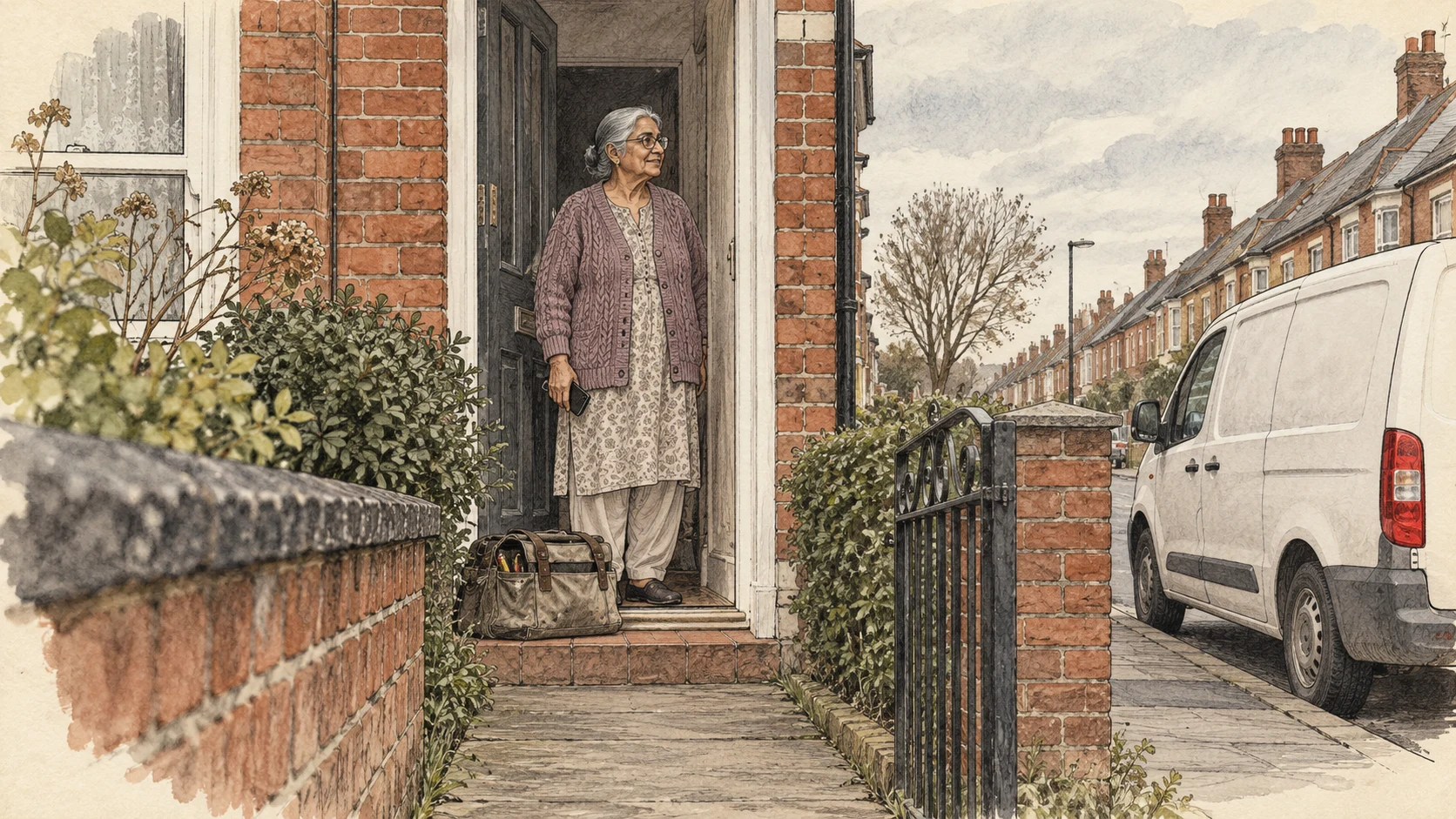
It is 7am, the boiler is dead, and a homeowner in Solihull is comparing three heating firms on their phone before the kettle boils. They are not reading your "about us". They want one number to tap and one reason to trust you over the next result — and if your site takes four seconds to load or buries the phone number, they have already gone back to Google.
That moment is what a trade website is for. Most lose it.
Last updated: June 2026 · UK pricing in pounds · Based on real trade builds measured live on Google PageSpeed
TL;DR:
- A trade website has one job — turn a local searcher into a phone call — and most fail it not because they look bad, but because they load slowly, hide the number, and prove nothing
- Trade buyers want three answers fast: what you do, where you work, and whether they can trust you. Give all three above the fold or lose the job
- Most local trade searches happen on a phone, often mid-emergency. A buried number is a job handed to the next firm in the list
- You now get found two ways — "electrician near me" on Google and "who's a good plumber in Solihull?" asked to ChatGPT. A modern site has to win both
- Trust does the selling: Gas Safe, NICEIC and NAPIT badges, real photos of your work, and genuine reviews answer "can I trust them?" before you ask
- Realistic UK pricing: a focused landing page from £250, a refresh from £1,497, and a full redesign from £2,497
Most trade websites lose the job in the first four seconds
A trade website does not lose work because the colours are wrong. It loses work because it loads slowly, hides the phone number, never names the towns you cover, and shows no proof you can be trusted.
None of those are matters of taste. They are commercial failures that quietly cost you the jobs you never hear about.
Watch how a trade site is actually used. A homeowner has a leak under the sink, no heating on a cold morning, or a flat tyre and an MOT due tomorrow. They are on a phone, slightly stressed, comparing two or three firms in under a minute. Google's own research found that as a mobile page's load time climbs from one second to three, the probability a visitor bounces rises 32%. Push it to four or five seconds and a chunk of those people are gone before your copy even appears.
The website did not lose on taste. It lost on speed.
You can measure that in thirty seconds. Run your site through Google PageSpeed Insights and read the Performance score out of 100 for mobile. Most trade sites built on bloated page-builders score in the 30s to 50s on mobile. A properly engineered build scores in the 90s — and that gap is the difference between holding a panicked caller and losing them.
A trade website that wins work needs seven things — none of them a logo
The trade sites that actually ring the phone share a short, repeatable anatomy. None of it is exotic. All of it is routinely skipped.
A trade website has one job: turn a stranger with a problem into a phone call. Everything else is decoration.
- One-tap call, on every screen. On mobile your number is a tappable button that dials instantly, fixed where a thumb can reach it. For plumbing, heating, locksmith and drainage, this single element does more than the rest of the site combined.
- A two-to-three-field quote form. For considered work — a roof estimate, a respray, a CCTV install — give the people who would rather not call a short form. Name, number, what they need. Nothing more.
- A page for every area you cover. Name the town plainly. This is how you answer "do they even come to me?" and how you rank for "[your trade] in [their town]".
- Reviews and ratings, on the page. Pull your genuine Google or Checkatrade reviews onto the site, near the call button, where they reassure at the exact moment of decision.
- Trust badges that matter in your trade. Gas Safe for gas and heating, NICEIC or NAPIT for electrical, plus manufacturer or scheme accreditations. These are licences to be trusted in someone's home, not decoration.
- Real photos of your own work. A finished ridge, a tidy consumer unit, a resprayed panel — shot in your van, in your area. Not a stock image of a stranger in a hard hat.
- A fast, mobile-first build. Fast loads, compressed images, no template bloat. The foundation the other six sit on.
Decoration does not ring the phone. Those seven do.
Trade buyers decide in under a minute: what they need vs what they get
Put what a local buyer needs next to what most trade sites give them, and the gap is obvious.
| What a trade buyer needs | What most trade sites do instead |
|---|---|
| Tap once to call, on mobile | Hide the number in a header or a menu |
| Confirm you cover their town | List "the Midlands" and leave them guessing |
| See proof they can trust you | Show services, but no reviews or accreditations |
| A page that loads before they give up | Ship a slow, image-heavy page-builder template |
| Photos of your actual work | Use stock photos of a stranger in a hard hat |
| A quick way to request a quote | Offer only a long form, or no form at all |
Fail two or more of those rows and the problem is not your marketing spend. The site is turning warm, ready-to-book customers away.
In 2026 you get found in Google and in ChatGPT, or not at all
Your customers find tradespeople two ways now. They search "electrician near me" on Google, and they ask ChatGPT, Gemini or Perplexity "who's a good plumber in Solihull?" A trade website has to win both, and the techniques overlap.
The Google side is well understood. To rank for "[trade] in [town]" you need a clear page for each service and each area, plain-language content that matches how people search, fast mobile performance, and a name, address and phone number that stays consistent across the web. A Google Business Profile sits alongside the site and feeds the local map pack.
The AI side is where most trade sites are invisible. When someone asks an assistant for a recommendation, it pulls from sites that state facts cleanly and carry the right structured data: real answers to real questions, proper headings a machine can read, and schema markup — LocalBusiness, Service, Review — that says exactly who you are, where you work, and what you do.
Concrete facts get cited. Vague brochure copy does not.
State your service area, your hours, your accreditations and your genuine reviews in plain text, and an assistant can quote them back to a searcher. This is the part nearly every template trade site misses, and it is increasingly where the next decade of being found is won. We cover the discipline in full in our small business website design guide.
Every trade leads with a different fear — build the site around it
The anatomy is shared, but the emphasis shifts by trade, because what the buyer is anxious about changes. The principles below are what each trade needs — and the real builds named alongside them are jobs we have done for that trade.
- Electricians. For an electrician, certification is the headline trust signal — NICEIC or NAPIT — and a homeowner checks for it before anything else. Website design for electricians should lead with that, then the areas you cover and an easy way to call. That principle shaped our build for MJB Electrical Services.
- Plumbers, heating and boilers. Emergency intent is high here, so contact should be effortless and Gas Safe registration visible at a glance. A good website for plumbers wins on speed — of page load and of reaching you. That is the thinking behind our build for the Walsall Boiler Company.
- Roofing. Roofing jobs are higher-value and considered, so proof of finished work matters more than instant calling — photographs and a clear route to a quote earn the enquiry. That principle guided our build for Riley Roofing.
- Garage, MOT and servicing. People search by town and by job — "MOT in [town]", "clutch replacement" — and many would rather book than phone, so clear service pages and an easy booking path do more than an emergency hotline. That shaped our build for Saki's Auto Centre.
- Locksmith and drainage. Pure emergency, often late at night, almost always on a phone. The site has to answer three things fast — do you cover me, can I trust you, how do I reach you — which is the principle behind our builds for Auto Electro Locksmith and Rapid Drainage Solutions.
- CCTV and security. A considered, trust-heavy purchase where credentials and example installs reassure more than urgency does. That emphasis shaped our build for Hi-Tec Security Systems.
- Bodyshop and vehicle work. Before-and-after photographs are the strongest sales tool a bodyshop has, paired with a simple route to a quote. That principle informed our builds for LK Mobile Auto Refinishing and the Vehicle Aircon Re-Gas Centre.
Different fear, same rule: lead with what worries the buyer in that trade, and make the next step impossible to miss.
A trade website costs £1,497 to £2,497, and earns it back in one job
Honest pricing depends on whether you need a tidy-up or a rebuild — and the right answer follows a conversation about what the site must do, not a number plucked before it.
| Band | Typical UK price | Best for | What you get |
|---|---|---|---|
| Landing page | from £250 | One trade, offer, campaign or local service page | A focused mobile-first page with a clear call or quote route |
| Web Refresh | from £1,497 | A decent trade site that looks dated or rarely rings | Redesign of key pages, one-tap calling, service-area structure, reviews and trust badges, mobile and speed fixes, schema |
| Web Redesign | from £2,497 | A site that needs to bring in materially more work | Full custom rebuild, per-trade and per-area pages, quote/booking flow, AI-ready structure, fast mobile-first build |
| DIY page-builder | "£10–£40/mo" | Pre-trade side projects only | Your evenings, a template thousands also use, and the jobs you never see arrive |
The DIY row deserves a word for tradespeople specifically. A Wix or Squarespace subscription is cheap in pounds and expensive in outcomes: the slow load, the template that looks like ten rival firms in your town, the emergency calls that quietly go elsewhere. When one boiler install, rewire or roof is worth hundreds or thousands of pounds, a site that lifts your enquiries even slightly pays for itself in a single job.
Speed is not an upsell in either band. When we rebuilt a local catering site, the production build measured 96 on mobile and 97 on desktop in PageSpeed; our own site sits at 94 and 96. Those are numbers you can check yourself.
Fast is not a luxury tier. It is what "built properly" means — and for a trade, it is the difference between catching the urgent caller and losing them.
Frequently asked questions
How much does a website for a tradesman cost in the UK?
A focused trade landing page starts from £250, a Web Refresh of an existing trade site starts at £1,497, and a full Web Redesign starts at £2,497, depending on how many services and areas you cover. DIY page-builders run £10–£40 a month but cost far more in the jobs they quietly lose. The right figure follows a conversation about what the site needs to do, so any quote comes after that, not before.
What is the most important feature on a trade website?
A one-tap call button on mobile, visible on every screen. Most trade enquiries are urgent and made on a phone, so the biggest single lever is making it effortless to dial you the moment someone decides. After that: clear service areas, visible reviews, and the trust badges that matter in your trade.
Do tradesmen really need a website, or is Facebook enough?
A social page helps, but it does not appear when someone searches "[your trade] in [their town]" on Google or asks an AI assistant for a recommendation, and it gives no control over how you look at the moment of decision. A proper website ranks for local searches, states the facts that build trust, and turns a searcher into a call. Treat social as a supplement, not the foundation.
How do I get my trade business found for "[trade] near me"?
You need a fast, mobile-first site with a clear page for each service and each area you cover, plain-language content matching how people search, a consistent name, address and phone number across the web, and a Google Business Profile alongside it. Increasingly the same structured, factual approach also decides whether ChatGPT and Gemini recommend you when someone asks.
Why is my current trade website not getting me calls?
Run it through Google PageSpeed Insights — a mobile score under 50 means people leave before it loads. Then check the basics: is your number a one-tap button, do you name the areas you cover, are there visible reviews and accreditations, does it work cleanly on a phone. Two or more failures usually explain a quiet phone.
What trust badges should a tradesman show on their website?
The ones that license trust in your specific trade: Gas Safe for gas and heating, NICEIC or NAPIT for electrical, plus any manufacturer approvals or scheme memberships such as Checkatrade or a trade association. Place them near your call button and your reviews — they answer "can I trust this person in my home?" at the moment it is being asked.
How long does a trade website take to build?
A Web Refresh of the key pages takes around three to four weeks. A full Web Redesign with per-trade and per-area pages and a booking flow takes six to eight weeks. The biggest variable is rarely the build — it is how fast you supply photos of your work, your accreditations, and a few decisions.
Related reading
- ↑ Small Business Website Design UK: The Honest 2026 Guide — the pillar guide this sits under
- ↔ Website Cost UK: What You Should Actually Pay in 2026 — the full pricing breakdown
- ↔ Website Redesign UK: Costs, Process & What You Actually Get — when to refresh vs rebuild
See what a trade website that rings looks like
Pick the trade most like yours, open the site on your phone, and time how fast it loads and how quickly you could call it. Then do the same to your own.
If yours comes up short, send us the URL. We will review the speed, mobile experience, trust signals and enquiry path, then tell you where calls may be leaking and what we would fix first.
Send us your URL for a free review →
No SDR follow-up. No nurture sequence. Just the data, and the next job you should have been winning.