How Much Does It Cost to Build a Shopify Store in the UK?
Co-founder of Ampliflow. Builds AI automation, websites, SEO/AEO, and growth systems for UK SMEs.
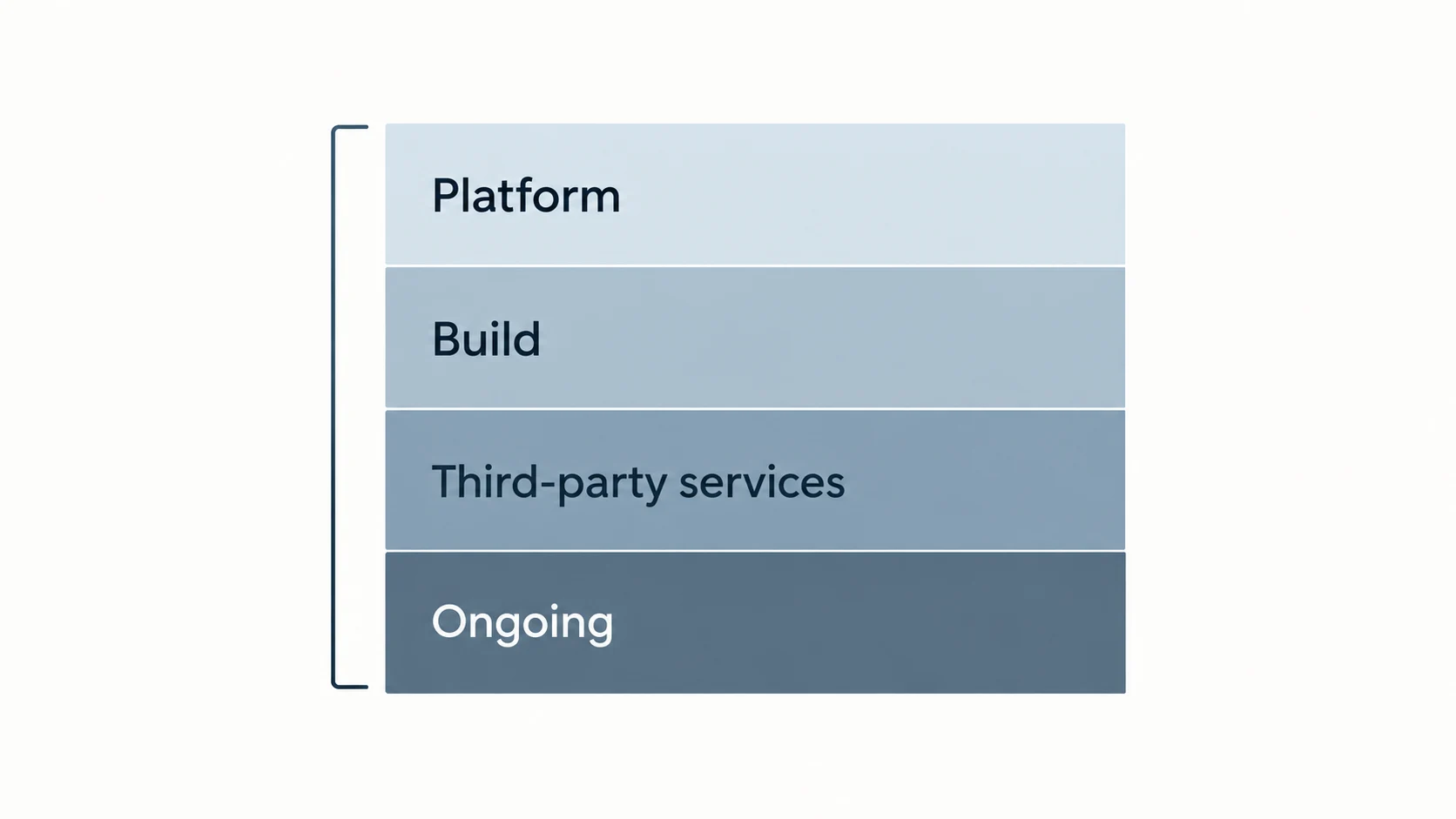
A Shopify store budget needs to cover the platform, build, connected services and ongoing work. A theme setup, custom theme and headless storefront are different jobs, so compare the same catalogue, content, integrations and launch responsibilities before comparing prices.
The build-price bands used below are illustrative budgeting scenarios, not measured UK market rates, recommended spending or Ampliflow quotes. They explain how scope can differ; a budget does not guarantee the listed work. Product data, design, photography, subscriptions, search, international selling and migration all affect the actual proposal.
The useful budget has four lines: platform, build, third-party services and ongoing improvement. If a quote shows only the build, it has hidden the cost of ownership.
Checked: 15 August 2026 · UK prices shown before VAT unless stated · Shopify and app prices can change · Build bands are editorial planning guidance, not Ampliflow pricing
Shopify website costs at a glance
| Route | Build planning band | Best for | Main constraint |
|---|---|---|---|
| DIY with a standard theme | £200–£1,000 plus your time | Testing a simple catalogue and offer | Strategy, content and your available time |
| Agency theme build | £3,000–£10,000 | Established small store needing professional setup and conversion structure | Theme boundaries |
| Custom theme development | £8,000–£25,000 | Brands needing distinctive templates and behaviour inside Shopify | Greater development and maintenance |
| Headless Shopify | £12,000–£80,000+ | Complex product discovery, content, markets or integrations | Highest build and operating responsibility |
The ranges overlap because “Shopify website” can mean ten products and a free theme or a multi-market catalogue connected to several operational systems.
Current Shopify UK platform pricing
As checked on 15 August 2026, Shopify's UK pricing page lists yearly-billed rates for Basic, Grow and Advanced. Shopify lists Plus separately from £1,800 a month:
| Plan | Listed price | Typical fit |
|---|---|---|
| Basic | £19/month | Solo operator or small team starting online |
| Grow | £49/month | Growing team needing more accounts and lower payment rates |
| Advanced | £259/month | Larger or international operation needing advanced features |
| Plus | From £1,800/month | Complex, high-volume or B2B commerce; contract terms vary |
Monthly-billed rates, payment fees and features differ. Shopify currently includes hosting, SSL and unlimited bandwidth with its core plans. Check the live Shopify UK pricing page before making a decision.
The plan is only the platform layer. You may also pay payment-processing fees, third-party transaction fees when not using Shopify Payments, apps, a theme, domain, email and specialist services. Recheck plan features and rates at the point of purchase; they are not permanent commercial facts.
Route 1: DIY Shopify store — £200 to £1,000 plus time
DIY is rational when the business is validating products, the catalogue is simple and cash is more constrained than founder time.
Allow for:
- Shopify subscription;
- domain and business email;
- a free or paid theme;
- essential apps;
- product photography or basic editing;
- policy, delivery and returns setup;
- payment and test-order time;
- several days or weeks of your own work.
The hidden cost is not that DIY looks amateur by definition. It is that catalogue structure, product proof, shipping logic and analytics compete with the work of finding customers and fulfilling orders.
Use DIY to prove the offer. Move to specialist help when the store is earning enough that small conversion or operational improvements have real value.
Route 2: professional theme build — £3,000 to £10,000
This is the strongest route for many UK SMEs.
A credible theme project may include:
- discovery and store architecture;
- theme selection and brand adaptation;
- homepage, collection, product, content and policy templates;
- navigation, filters and search configuration;
- app selection and setup;
- product or catalogue import support;
- payment, shipping and tax configuration;
- analytics and consent setup;
- mobile, accessibility and browser testing;
- SEO foundations and redirects;
- training and launch support.
Ask how many products will be entered or cleaned, whether copy and photography are included, and which integrations sit outside the figure. “Store setup” can otherwise mean only theme installation.
Route 3: custom Shopify theme — £8,000 to £25,000
Custom theme work makes sense when the store needs a distinctive buying experience but benefits from remaining inside Shopify's native storefront model.
Cost rises with:
- original UX and component design;
- unusual product or variant behaviour;
- sophisticated collection and merchandising sections;
- subscriptions, bundles or personalisation;
- richer editorial landing pages;
- advanced app integration;
- international content and markets;
- migration and redirect complexity;
- more templates and acceptance states.
Clarify what is genuinely custom. Some proposals adapt a commercial theme; others build a theme system from the ground up. Both can be appropriate, but they are not the same asset.
Route 4: headless Shopify — £12,000 to £80,000+
Headless separates the customer-facing storefront from Shopify's commerce back office. It can provide stronger control over product discovery, content, rendering and unusual journeys. It also creates a separate frontend, deployment process and maintenance surface.
Use it when a valuable constraint cannot be removed cleanly in a theme. Do not use it as a badge for a store that has not yet proved its offer.
Our detailed headless Shopify cost guide explains the build, migration and ongoing responsibilities to price. Shopify's official supported stack is Hydrogen, with the Storefront API available for other headless frameworks.
Ten factors that change a Shopify quote
1. Number and quality of products
Five hundred clean records can be easier than fifty inconsistent ones. Data cleaning, image naming, variant logic and collection assignment are labour.
2. Product complexity
Bundles, subscriptions, personalisation, compatibility, volume pricing and made-to-order rules need more design and testing.
3. Design depth
Configuring a theme is different from creating an original design system, interaction states and art direction.
4. Photography and content
Product pages sell through evidence. Photography, video, comparison, sizing, FAQs and buying guides can exceed the cost of the page code and deserve explicit scope.
5. Search and filtering
Large catalogues may need more capable search, synonym control, merchandising and filters. Third-party tools often add monthly fees.
6. Apps
Reviews, email, subscriptions, returns, loyalty, search, bookings and feeds add licences, scripts and operational dependencies. The cheapest app is not cheap if it slows the store or traps data.
7. Integrations
ERP, PIM, warehouse, accounting, marketplace and customer-service systems can turn a storefront project into an operations project.
8. Migration
Products are one part. Customers, orders, content, URLs, images, reviews, subscriptions and account journeys all need decisions. Use our Shopify SEO migration checklist before pricing the move.
9. Markets and localisation
Currencies, domains, languages, regional catalogues, duties and content increase the number of states that must be designed and tested.
10. Acceptance and support
Real mobile-device testing, test orders, accessibility, redirect verification, analytics and post-launch cover are part of a safe store, not administrative extras.
The ongoing costs to include
| Cost | Budget question |
|---|---|
| Shopify plan | Which features, staff access and payment rates justify the chosen tier? |
| Payment processing | What rate applies to the actual payment mix and turnover? |
| Apps | Which are essential, usage-priced and replaceable? |
| Domain and email | Who owns and renews them? |
| Theme licence | Is it one-off, transferable and eligible for updates? |
| Support | What maintenance, response and improvement time is included? |
| Production | How will new products, photography and campaign content be created? |
| Acquisition | SEO, email, social and paid media are not created by the platform fee |
Ask for the first-year total and a steady-state monthly total. Include VAT treatment and payment fees separately from the agency fee.
A simple budget model
For illustration, suppose a professional theme build costs £7,500. An average order leaves £45 after product, payment and fulfilment costs, before overheads and tax.
It would take about 167 genuinely additional orders at that amount to recover the build fee alone. Spread across two years, that is roughly seven additional orders a month, before ongoing website costs, overheads and tax.
This is not a forecast. It is a threshold. Compare it with current traffic, conversion and repeat purchase. If the case requires an implausible improvement, reduce the scope or fix acquisition and product economics first.
What should be in the proposal?
- the commercial objective and baseline;
- chosen Shopify plan and why;
- theme, custom theme or headless architecture;
- named templates, journeys and products in scope;
- content, photography and data responsibilities;
- apps, licences and expected monthly charges;
- migration and redirect work;
- payment, shipping, tax and market configuration;
- analytics and consent events;
- mobile, browser, accessibility and performance checks;
- launch, rollback and support;
- account, code, data and design ownership;
- exclusions and change-control method.
The proposal should make the first-year ownership cost calculable without a second sales call.
Where to save and where not to
Save on architecture you do not need
A good theme is cheaper than headless. A standard integration is safer than custom middleware. Fewer apps reduce cost and fragility.
Do not save on product evidence
Weak images, missing measurements, vague delivery and thin descriptions damage every acquisition channel.
Do not save on migration
Lost URLs, customer confusion and broken tracking are expensive after launch. Inventory and test them before the switch.
Do not save on mobile acceptance
The store must work on the devices customers use, with the real apps, media and consent layer present.
Frequently asked questions
How much is Shopify per month in the UK?
On 15 August 2026, Shopify's UK pricing page showed yearly-billed Basic at £19/month, Grow at £49/month and Advanced at £259/month, with Plus listed separately from £1,800/month. Monthly billing, contract terms, features and transaction costs differ, so verify the live page before buying.
Can I build a Shopify website for free?
You can trial the platform and use a free theme, but a trading store still has subscription, payment, domain, content and time costs. “Free build” usually means doing the work yourself.
How much does a Shopify agency charge?
Ask for a scope covering the catalogue, templates, content, integrations, migration, testing and support. The build bands in this guide are illustrations, not a survey of agency prices. For Ampliflow, commerce work starts from £1,497; that starting point does not promise a complete store or headless build.
Is Shopify cheaper than WooCommerce?
Shopify bundles hosting, security and the commerce platform into a subscription. WooCommerce can have lower software entry costs but leaves hosting, updates, plugins and technical ownership more distributed. Our Shopify vs WooCommerce UK comparison prices the complete operating responsibility.
How long does a Shopify build take?
Agree the schedule after product data, imagery, integrations, migration and approvals are understood. Ask which tasks depend on your team and how the provider handles a delayed dependency. A generic timeframe is less dependable than a plan for your actual store.
Price the store as an operating system
The storefront, catalogue, checkout and back-office workflow keep costing or earning money after launch. Choose the simplest route that removes the current constraint, then budget the first year in full.
If the route or scope is still unclear, Get unstuck.
Related: Choose a Shopify development agency · Headless Shopify cost UK · Migrate to Shopify safely · Shopify speed optimisation · Shopify vs WooCommerce · Shopify SEO guide · Headless Shopify development · Website build options