Marketing Automation Agency: What to Look For in the UK (2026)
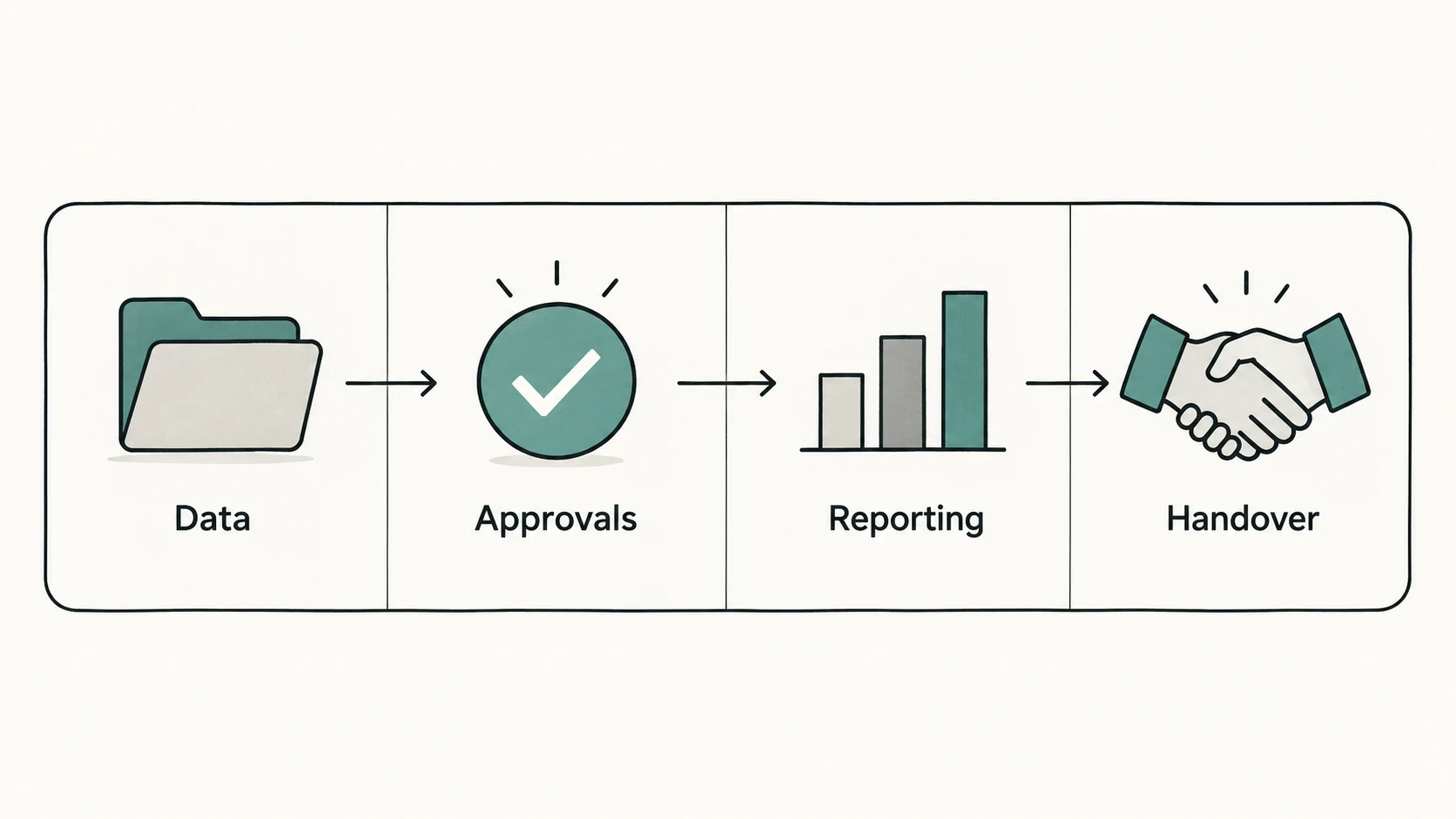
TL;DR: Choosing a marketing automation agency means comparing the problem it will solve, the tools involved and who will maintain the work. This guide explains six agency models, the main cost drivers and the questions to ask about data, approvals, reporting and handover. Compare written scopes rather than assuming a high retainer or an AI label means better results.
If you want an outside view before taking sales calls, bring the process you want to improve to a clarity chat: Get unstuck.
Why Marketing Automation Agency Costs Vary
Marketing automation is not necessarily the most expensive agency category. Search advertising costs do not establish service prices, and a keyword’s cost per click does not show what a business should pay for delivery.
Costs rise when a project combines strategy, data preparation, several integrations, campaign production and ongoing support. A simple workflow should not be compared with a programme covering multiple teams or markets.
Start with the problem: inconsistent follow-up, time-consuming campaign work or reporting that cannot connect activity with sales. Then ask which parts need specialist support and which your team can own.
For broader context, read AI automation for UK businesses.
The 6 Types of Marketing Automation Agency (and What Each Actually Delivers)
Buyers often compare agencies as if they are interchangeable.
They are not.
The fastest way to avoid a costly mismatch is to identify the operating model first, then compare suppliers inside that model.
1) Platform specialists
These are certified partners focused on one ecosystem, usually HubSpot, Marketo, Salesforce Marketing Cloud, or ActiveCampaign.
They are generally strong at configuration, implementation, and platform best practice. If you already selected a platform and need it working properly, this can be the shortest route.
The trade-off is scope. They tend to optimise within platform boundaries rather than redesign your wider revenue process.
2) Email-first agencies
Email-first teams are usually excellent at lifecycle architecture, deliverability, segmentation, and conversion copy.
If email is your biggest revenue channel, this specialism can outperform broader teams.
Where they can struggle is orchestration across paid, social, CRM ops, and offline touchpoints. You may still need another partner for full funnel systems.
3) Full-stack marketing agencies with an automation offer
These firms provide SEO, paid media, design, social, and often web work, with automation added as one line in the service menu.
You get breadth and convenience. One supplier can run most marketing functions.
Depth varies heavily. Some are excellent. Others provide light workflow setup and call it automation strategy.
4) AI-native automation agencies
This group tends to build bespoke systems, integrate tools at API level, and design agentic workflows for specific business processes.
Done well, they can produce large efficiency gains and tighter reporting because the system is shaped around your commercial model, not forced into a generic template.
The weak version of this model is pure novelty: clever demos with limited operational stability. Vetting matters.
5) Freelance consultants
A good marketing automation consultancy can be high-value if your needs are clear, your team can implement quickly, and you do not need heavy daily execution support.
Consultants can move fast, bring senior judgement, and keep costs sensible.
The obvious limit is capacity. If you need sustained multi-channel delivery, one person can become a bottleneck.
6) Enterprise integrators
Accenture, Deloitte, and similar consultancies sit here.
They are built for complexity: multi-market governance, enterprise procurement, strict compliance, layered stakeholder structures.
If you are a mid-market business, this is often excessive. If you are operating across regions with legacy architecture and regulatory constraints, it may be the only workable route.
Here is the practical comparison most buyers need.
| Agency type | Work to assess | Best fit to discuss |
|---|---|---|
| Platform specialist | Configuration, workflow setup and platform support | Teams committed to a particular platform |
| Email-first agency | Campaigns, segmentation, delivery and list strategy | Businesses whose main need is email |
| Full-stack agency | Coordinated work across several marketing channels | Teams wanting a broad supplier relationship |
| AI automation agency | Connected workflows, custom integrations and controls | Processes needing specialist technical work |
| Freelance consultant | Defined advice or implementation | Teams able to handle the remaining work |
| Enterprise integrator | Governance and complex programmes | Larger, multi-market or highly connected organisations |
If you are weighing agencies now, keep a shortlist and compare suppliers against the same scorecard. It is the only fair way to separate polished sales language from real delivery capability.
What Good Marketing Automation Actually Looks Like
Many proposals promise "automation" without explaining what good delivery looks like in the real world.
Here is a checklist to use when assessing a marketing automation company.
Lead scoring based on behaviour, not just demographics
Firmographic data tells you who a lead is.
Behaviour can provide clues, but a click or page visit does not establish buying intent.
Use signals whose source and meaning are understood. Test whether they predict qualified outcomes, and keep explicit replies, requests and objections ahead of inferred scores.
Simple fit rules can be appropriate when outcome data is limited. A more complex model should earn its place by helping the sales team make better decisions.
Multi-channel orchestration from one decision layer
A buyer does not experience channels separately.
They experience one brand.
Good automation uses a shared decision layer so email, paid retargeting, SMS prompts, and sales notifications respond to the same event logic. Bad automation runs each channel in isolation and creates contradictory messaging.
For example, a pricing request can pause a generic sequence and create a task for the sales team. Do not automatically add another marketing channel: each channel needs its own eligibility checks, and objections must stop follow-up.
Content personalisation by journey stage
Personalisation is not dropping a first name into a subject line.
It is delivering the right message based on stage, risk profile, and likely objection.
A first-touch visitor needs clarity. A repeat visitor needs proof. A stalled deal needs friction removal.
A strong agency marketing automation setup maps assets to those shifts, then updates routes as behaviour changes.
Attribution that supports budget decisions
If your reporting cannot tell finance where pipeline came from, automation has failed commercially.
Good attribution combines channel touchpoints with CRM outcomes, time-to-conversion windows, and deal quality. It accepts that no model is perfect, but still gives leaders enough confidence to move spend toward what works.
Without this, teams fall back to whoever shouts loudest in the monthly meeting.
Reporting a CMO can read in 30 seconds
The right report answers five questions quickly.
What moved this week? Why did it move? Which segment improved? Where are we leaking? What is the next action?
If reporting requires a 45-minute explanation every time, the system is too complex or too poorly designed.
At this point, one test is to compare your current setup against a practical implementation blueprint. The pillar article covers that in depth: AI automation for UK SMEs: complete guide.
Mid-project checkpoint
If your current stack is fragmented and you want a team to handle both architecture and execution, review what a managed build includes at our automation service page.
The Red Flags That Cost Businesses Thousands
You can avoid most expensive mistakes by spotting a few patterns early.
"We'll 10x your leads in 30 days"
No serious operator can promise that without caveats.
Lead volume depends on offer strength, market demand, sales process, and channel economics, not just workflow logic. Strong partners set ranges, assumptions, and decision checkpoints.
When claims sound absolute, risk usually sits with you.
No access to your own data and accounts
If the agency controls everything and you cannot export your own system state, you are renting your operations.
You need administrative access, documentation, and clear handover rights from day one. Otherwise, switching providers becomes a technical hostage situation.
Platform lock-in disguised as "our proprietary system"
Proprietary software can add value, but ask which parts are included, how they are supported and what happens if you leave.
Ask what is genuinely proprietary, what is standard software, and what happens if you leave. If the answer is vague, walk away.
No clear onboarding timeline or milestones
A proper onboarding plan includes discovery, architecture sign-off, implementation sprints, QA, go-live criteria, and review cadence.
No timeline usually means one of two things: the agency has not done this enough times, or they do not want accountability for delays.
Vanity metrics in case studies
Impressions, reach, and open rates have their place.
They are not board-level outcomes.
Case studies should explain the relevant outcome, baseline, period and limitations. When sales evidence is missing, ask why and what was measured; missing data does not justify inventing a revenue result or assuming poor performance.
The silent red flag: vague ownership of delivery
This one is easy to miss.
You speak to a senior strategist in pitch meetings, then day-to-day delivery is passed to a junior team with limited commercial context.
Ask who does the work, not just who sells the contract.
Real Pricing for Marketing Automation in the UK
Most buying mistakes happen when businesses compare headline retainers without comparing scope.
Use this to compare the scope of current written quotes; it is not a market tariff.
| Approach | What should appear in the quote |
|---|---|
| Consultant | Defined advice or implementation, day or project charges, and what your team must do |
| Managed service | Setup, recurring deliverables, software, usage and maintenance |
| Custom automation | Discovery, development, integration, testing and ongoing support |
| Wider programme | Multiple workstreams, governance, training and dependencies |
Now, the practical interpretation.
Consultant pricing works when your internal team can implement and maintain systems.
Managed service pricing works when you need consistent output and regular optimisation but do not need enterprise complexity.
AI-native pricing works when your process is unusual, your data model is messy, or standard platform workflows cannot represent how your commercial engine actually runs.
Enterprise pricing works when governance overhead is high and integration risk is expensive.
A few cost drivers buyers often miss:
- Data cleanliness. Dirty CRM and inconsistent naming conventions slow everything down.
- Integration depth. Even a two-tool integration may need access checks, testing and failure handling.
- Stakeholder count. More departments means longer approval loops and additional governance layers.
- Channel breadth. Each active channel adds design, logic, QA, and reporting overhead.
- Change frequency. Fast-moving offers need faster revision cycles, which increases active management time.
Price alone is a poor filter.
The better question is: does the scope directly map to the bottlenecks that currently limit pipeline and conversion?
Contract Terms That Matter More Than the Headline Price
Two proposals can show the same monthly fee and still carry very different risk.
Start with contract length. A twelve-month lock-in before delivery quality is proven is difficult to justify for most SMEs. A shorter initial term with clear performance reviews is usually healthier for both sides.
Then check change-request policy. Marketing systems never stay static. Offers change, routes change, team structures change. If every adjustment triggers a new statement of work, your operating cost will rise faster than your retainer.
Ask how incident handling works as well.
If a workflow breaks on a Monday morning, do you have a response SLA, named owner, and escalation path, or a generic support inbox?
Finally, clarify what happens at exit.
You need full exports, process documentation, credential transfer, and a practical handover window. Otherwise, you may save a few hundred pounds monthly now and pay far more later when you need to switch.
How to Evaluate an Agency in 5 Questions
Use these in every first call.
Short, direct, impossible to dodge.
1) "Show me a campaign you ran for a business my size"
Size and growth stage matter.
A process that works for a national enterprise with a 20-person marketing team may collapse in a 12-person firm with two marketers and one CRM admin.
Ask for context, constraints, timeline, and measurable outcome.
2) "What happens to my data if we stop working together?"
This question reveals professionalism fast.
A solid answer covers ownership, export format, account access, transition period, and documentation. If you hear hesitation, you have found future pain.
3) "What's your onboarding timeline and what do I need to provide?"
Good agencies can state milestones clearly: week-by-week inputs, dependencies, and approval points.
If you cannot see the first 30 days in practical detail, delivery risk is high.
4) "How do you measure success, and when should I expect to see it?"
The agency should separate leading indicators (engagement, speed, data quality) from lagging outcomes (pipeline, conversion, revenue).
Serious teams explain what should move in month one, month two, and quarter one.
5) "What does your team look like, and who actually does the work?"
You are hiring a team, not a logo.
Ask for named roles: strategist, automation architect, implementation specialist, analytics lead, and account owner. Then ask availability.
No role clarity means execution ambiguity.
This five-question framework is one of the fastest ways to filter the market of marketing automation agencies without wasting a month in proposal theatre.
A Practical Selection Process You Can Run in Two Weeks
Most firms overcomplicate agency selection.
You do not need a six-week procurement cycle unless governance requires it.
A two-week process is usually enough to choose well.
Week 1: Discovery and shortlist
- Define your top three commercial outcomes.
- Define your non-negotiables on data ownership and compliance.
- Shortlist 4-6 agencies by model fit, not brand familiarity.
- Send the same brief to each firm.
Consistency is the point.
If every agency gets a different version of your problem, you cannot compare answers fairly.
Week 2: Evaluation and decision
- Run the five questions above in every call.
- Score each proposal against outcomes, delivery plan, team depth, and ownership terms.
- Request one reference call with a current client.
- Choose the partner whose plan is clearest, not the one with the most jargon.
The best proposal usually feels almost boring.
Clear milestones. Clear risks. Clear responsibilities. Clear reporting.
No theatrics required.
Closing: Buy Capability, Not Promises
A marketing automation agency should help your team make better commercial decisions with less operational drag.
If all you receive is more software and more meetings, you bought activity instead of capability.
Strong delivery is straightforward to recognise.
You retain ownership of data and accounts. Your team understands what has been built. Reporting links effort to outcomes. And month by month, manual work falls while predictable growth work increases.
That is the standard.
If you are deciding between suppliers now, use one decision pack for all of them, ask the same five questions, and keep emotion out of it.
Then move.
Delay is often more expensive than the retainer.
For a side-by-side buyer checklist, review UK automation agencies. If you want to discuss the work before choosing a supplier, Get unstuck.